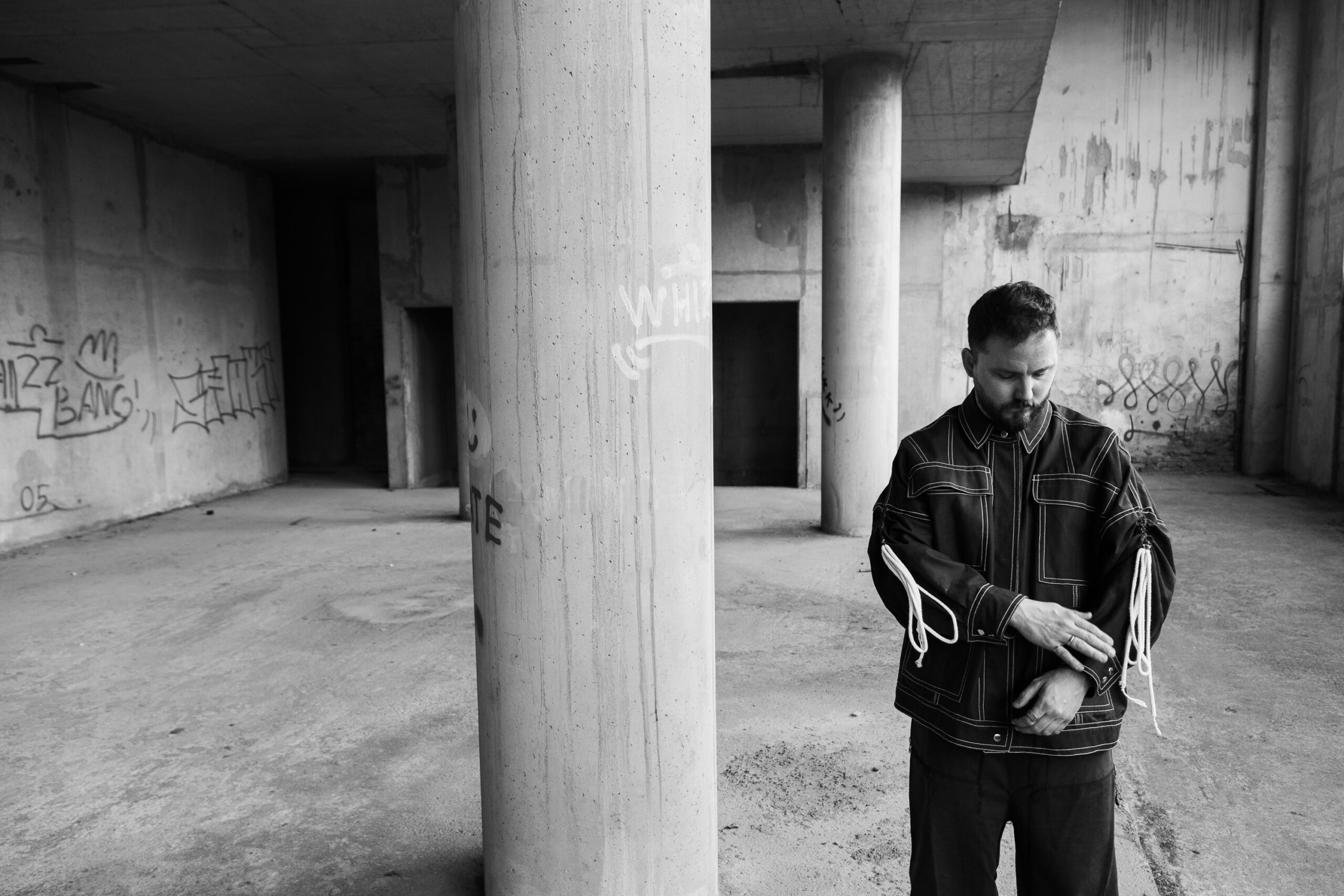
Àbáse had to go around the world – geographically and sonically – to get back to Hungary. The Budapest-born, Berlin-based beat-maker and composer has spent years building a musical language shaped by jazz, club music and sounds encountered along the way, including those from Brazil, Ghana and South Africa. But the longer he lived in Berlin, the more he found himself looking closer to home. On his third full-length album, Nefelejcs, he brings Hungarian folk into that global conversation, weaving traditional melodies and poems, brought to life by folk singer Kacsó Hanga, into beat-driven productions. He does so alongside some of Hungary’s most distinctive contemporary voices, from singer Csinszka to rapper Beton.Hofi, as well as musicians from Berlin’s adventurous jazz and improvisation scene. The record brings together his two approaches to making music: sample-based, heavily produced beats and the spontaneity of a full-band, analogue recording process of live musicians. Named after the forget-me-not flower (his late mother’s favourite), the record is as much about remembering where you come from as it is about figuring out what to do with it.
When did you first realise that this album was going to be about Hungary and your own heritage?
I’ve been looking into and drawing inspiration more and more from not just traditional Hungarian music but also the heritage I grew up with. The more time I spent in Berlin, the more my identity formed as a Hungarian. That didn’t really mean anything to me when I lived there. I think many expats or immigrants share this feeling. Being in this multicultural community, it defines you much more. Artistically and musically, I was asking myself: what can I contribute? What is my unique perspective that I can bring to the Berlin scene?
You’re taking traditional Hungarian material and putting it into a contemporary, beat-driven context. What was your creative process behind that?
She was the one who told me not to worry about the folk police.
It could have been easy to take Hungarian folk melodies and perform them with the same band that played on my previous project, Awakening, giving them a spiritual-jazz vibe. But I needed something deeper and more all-encompassing. I started with the loops and beats I’d made, and I already had the vocals from the Hungarian musicians. Then I invited a rhythm section from the scene in Berlin and its surroundings: Petter Eldh on bass, Otis Sandsjö on saxophone and Silvan Strauss on drums. I deliberately wanted an outside perspective because it helped me make the music more radical and unexpected. We only had two days with the band at Brewery Studios, and we recorded everything to tape. The versions you hear are the ones we improvised, and many are first takes.
[Kacsó] Hanga, on the other hand, is a true, traditionally trained folk singer. I wasn’t going to manipulate her vocals, so we wanted to experiment with everything around them. I took all the tracks and was able to chop them up. I wanted to bridge electronic production and live elements so seamlessly that you couldn’t tell where one started and the other ended.
Obviously, my audience is more international. Bringing in Hungarian lyrics doesn’t make sense on paper. But my logic was: we love Brazilian music so much, and it works everywhere around the world. People are listening to Bad Bunny and Latin music all the time. People go crazy for Rosalía. I’m sure a lot of European audiences don’t speak Spanish. So why couldn’t it happen with Hungarian music?

How was it, working with someone so deeply rooted in folk music? Were you afraid of any backlash from the folk scene?
When it comes to interpretations, she [Kacsó Hanga] almost always turns things down — mostly because she feels the musical idea isn’t good enough. She was the one who told me not to worry about the folk police. There are traditionalists who say folk music should sound a certain way and that you can or can’t do certain things with it. But Hanga said not to worry about that because she can stand behind it wholeheartedly: if you mute the music around it, what she does is fully authentic.
The title Nefelejcs means ‘forget-me-not’. When did you know that was going to be the title?
My mom passed away three years ago, and the forget-me-not was her favourite flower. But it wasn’t a concept I’d planned from the beginning. It all happened organically. There was a sample that said “remember”, and one of the core beats on the album was always titled ‘Remember’. For a long time, I somehow knew the album had to have something to do with remembering and not forgetting. Then Csinszka, one of the Hungarian singers, came up with the song title Nefelejcs, and it all came full circle.

You’ve spoken about wanting to make the album radical but also approachable. How did you find that balance?
My mom passed away three years ago, and the forget-me-not was her favourite flower.
I knew I wasn’t going to make music for big Spotify playlists, because that was the feedback I’d received. Some people told me I needed to be more predictable. But I’m like, there’s no way I’m going to make lo-fi beats or whatever. With streaming platforms, social media and especially AI, it was kind of the last straw. Even before that, I’d become really fed up with music that all sounded so similar. I was asking myself: Why should anyone listen to this when you literally have the entire history of recorded music at your fingertips?
Just because you work super hard on something, doesn’t mean it has cultural relevance. I thought, okay, I need to make something radically new. It needs to have some kind of impact. At the same time, I wanted to make the music approachable. I like pop music, good songs and songwriting, and accessible productions. For example, the first single [‘Fekete Szem / Black Eye’] has a heavy trap beat with these soft Hungarian folk vocals. Instead of making a smooth, live-band version of a folk song, I asked myself, ‘What would this song sound like over Afrobeats or trap?’ I just love these musical conversations.
There’s a lot of Àbáse in this record, despite all these different musical voices. What role do you play in bringing these different worlds together?
My projects are always about bridging something. I represent the production, the musical framework or the musical background, but I have a supportive role. It’s always the guests who carry a very strong core: this undeniable, authentic element. On my first project, we had someone from Morocco, Northern Ghana and Nigeria. No matter how ancient or authentic that music was, or how far removed it was from me, they were the ones representing it. I’m just kind of a bridge.

You’ve lived in Berlin for seven years now. What has the city changed about the way you make music?
There are traditionalists who say folk music should sound a certain way and that you can or can’t do certain things with it. But Hanga said not to worry about that.
There’s a unique opportunity here because there’s space for people to express themselves, and there’s no one dominant culture. I don’t think I would have been able to do this in London or Paris. In Berlin, we’re given enough space, and there’s no single defining music scene we have to accommodate, at least in my circle. Obviously, electronic music and techno have a very distinctive lineage that we’re all inspired by. But I feel like we don’t need to accommodate anything. We’re free to try whatever the hell we want, and there’s a healthy amount of experimentation. It’s encouraged, too. It’s this crazy clash of cultures and heritages. The people who inspire me from all these amazing places have made me reflect on my own background, too. I started asking myself: What am I bringing to the table? What does it mean? How can I contribute to this scene in the most meaningful way? And the most meaningful way is the most authentic way.
Has making this album changed your relationship with Hungarian folk culture?
Definitely. We grew up learning these songs and even some basic dances, but I wasn’t giving it much thought. In our left-liberal circle, being passionate about national art or folk music was often considered lame or even tied to nationalism. Even today, when I tell some family members or friends about it, they’ll immediately make jokes about folk music. That’s also why I didn’t touch folk music very often. But somehow it’s still in our DNA, right? Now that I’ve developed a healthier relationship with folk culture, I feel like I have something to tap into. There are all these subconscious things you carry with you: memories, smells, places.

How do you feel about releasing something so closely tied to your identity and upbringing? What do you hope people take away from that?
People are listening to Bad Bunny and Latin music all the time […] why couldn’t it happen with Hungarian music?
When we released the first single, I was freaking out, for sure. I feel responsible in two directions. One is that I need to invite an international audience into this music. My mission is to open this door, represent my country and my heritage, and show people how beautiful it is. And back home, there’s this pressure of not being just another guy doing some weird folk stuff. But when we had the first version of Búsulni NemTudtam, it was about six months before the election. There was always this bitterness in Hungary. Back then, everything felt so desperate and hopeless. I was listening to it on public transport in Budapest, looking around at the faces on the tram, and thinking, ‘I can’t wait to share this with you guys!’ I wish everyone could realise how much beauty there is here and how much hope and opportunity.
Nefelejcs arrives on Nov 6 via Bridge The Gap / Oshu Records. Catch Àbáse live with a full band at Gretchen in Berlin on Nov 5 and follow him on IG @abase_music.