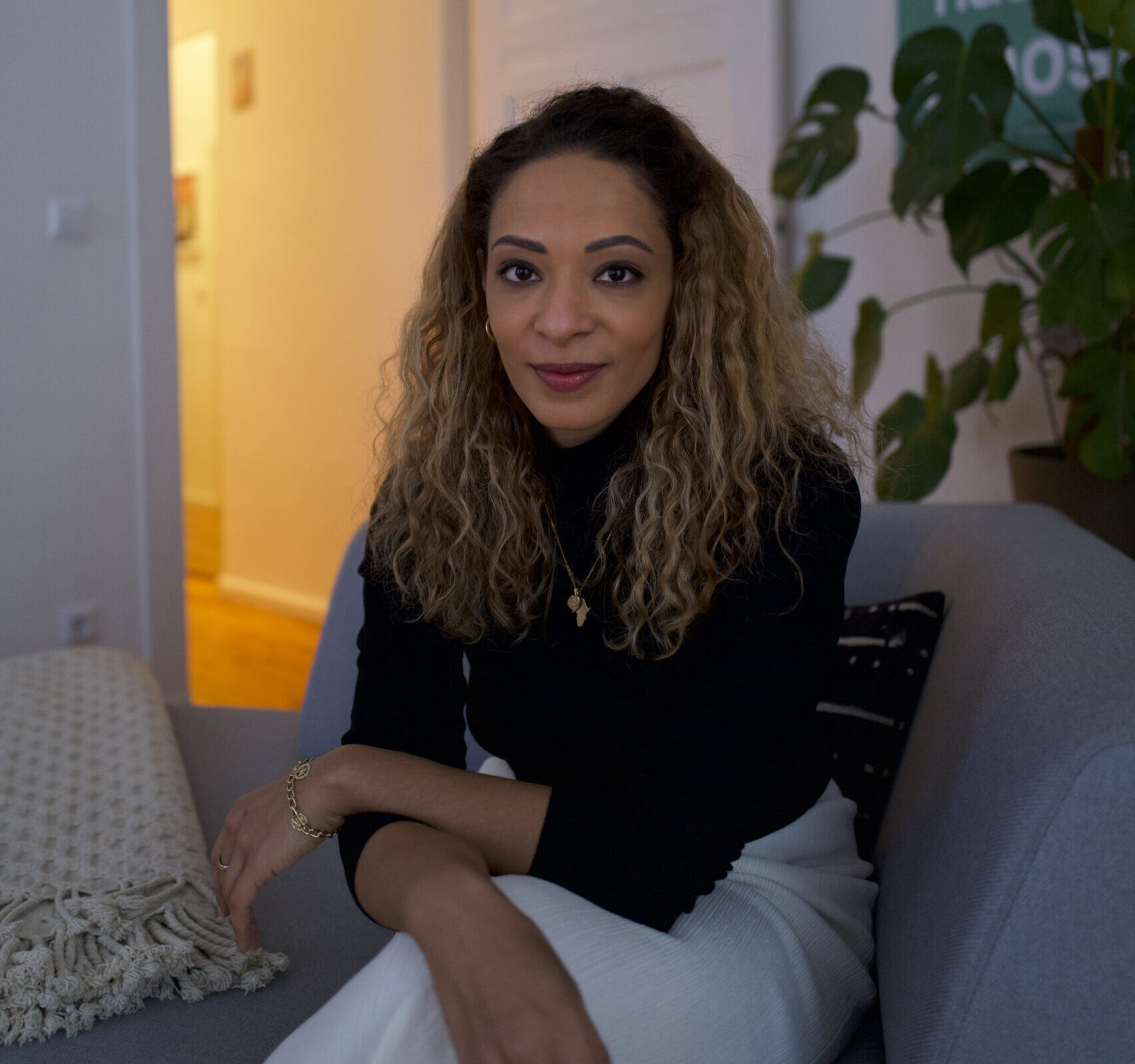
Black-owned, Berlin-based magazine DADDY turns 10 this October. It began as an online platform to centre marginalised voices and poke a little fun at the (German) powers that fail to do so. Since 2020, they annually print a sleek and sexy magazine, each with a theme – TOGETHER, DREAMS, JOY, POWER – chosen by editor-in-chief Kemi Fatoba. To her impressive career in publishing, writing for Vogue, Vice, The Face and so many others, Fatoba proudly adds the decade-long run of DADDY. The team invites contributors from underrepresented communities, accepting essays, fiction, poetry, illustration, photo essays and art. We sat with Fatoba to talk about the so-called ‘doomed’ state of publishing, what Black joy means to her and how Berlin might take itself a little less seriously.
Congratulations on the 10-year anniversary of DADDY. How do you feel?
It’s hard to believe we’ve been doing it for so long. There have been so many iterations and different people involved over the years, but what I really like is that we often came back to people we worked with on previous issues. That makes it feel like it’s not just a job. I made a lot of friends through DADDY.
Your most recent issue was ‘POWER’. What about the topic called to you?
I came to Berlin in the summer of ‘refugees welcome’. Germany was doing the right thing; it was a really positive climate. Then 2016 happened. Trump came into power for the first time. Brexit happened. It felt like things were getting worse. Pandemic, lockdown – what’s next? Then we wrote about Black Lives Matter, and still, lockdown continued, then this wave of anti-Asian sentiment. Every year, something new came. Now we’re in this strange situation where the wrong people have too much power. So our last issue came from that feeling of being powerless. What can we do to still feel our power?
Do you have a favourite issue?
I’m super proud of our first issue [‘TOGETHER’], because it was unknown territory. It was really exciting, going to the printer, choosing the paper, feeling the texture, the different types, smelling the paper… I’m really weird like that. I wanted to make sure that when you open the magazine, it smells really good.

When did you get into publishing?
I have a background in journalism. I’m from Vienna originally and I studied media communication. During the first lecture, the professor said that it’s absolutely pointless that we’re studying this degree because publishing would soon be obsolete; there are no job opportunities, it’s extremely expensive to print anything and nobody reads anymore.
Then you went on to have this incredible career in publishing? Ha!
I’m really stubborn. To my detriment sometimes. If you really want to do it, if that’s the thing that brings you the most joy, then it’s what you do. I did try doing other things. I was in advertising, I did events for some time and I always came back. I’m not fighting it anymore.
DADDY began 10 years ago with “a vision to diversify the German mediascape”. German media? Not diverse?
When we launched, what happened a lot in German media was that the same people who had always been in power wrote about diversity and gave their take on queerness, racism, whatever. They were still mostly white, middle-aged, privileged men. But it should be so simple. Let the people who you’re talking about speak for themselves. I don’t need your take on my experience, you know? That’s why we decided to start DADDY. Back then, it was new and revolutionary. Ten years later, that’s changed a lot. What we’re doing isn’t radical, giving underrepresented communities a platform, a chance to get published and a chance to be centred without being pigeonholed and only writing struggle stories.
Do you think the German mediascape is more diverse now than it was in 2016?
There are more opportunities, and media houses are trying. But still, they’re trying a bit less than they were a few years ago. Everything that’s happening in the US also reaches us in Europe, unfortunately: the DEI backlash, anti-woke movement. There’s more catering to the right. The German government is such a big instrument in the media as well. Journalists aren’t as outspoken as they could or should be, because there are real-life consequences. I know a couple of people who are vocal about their opinions and don’t self-censor who lost their jobs.

How did DADDY come about?
You can quote Audre Lorde and in the next sentence write about your threesome.
It was started by a group of friends. We all worked at the same agency and had all just moved to Berlin: me; Sophie, the co-editor for a long time; Coco, our art director and Shaun. Berlin had this reputation of being super open-minded, but the more we interacted with our colleagues, the more we were like, ‘What is happening?’ People would say such random, horrible stuff, like in a meeting, suddenly someone would say some sexist joke. Or, I don’t know, there was a group chat for the guys in the agency, and they didn’t include queer men. Stuff like that, you know? We had so much material. How is it possible that people act like this in Berlin? And why does the rest of the world think Berlin is this amazing, open-minded utopia? In reality, it’s just another place where you have super-problematic people. So instead of bitching and ranting, we said, ‘Why don’t we do our own thing? We can bitch and rant there’. We created an online magazine where we could make jokes and talk about everything that’s ridiculous about Berlin – because Berlin is very ridiculous.
How about the name ‘DADDY‘?
The four of us had this group chat called Daddy’s Girls. It was an inside joke to call each other ‘Daddy’ all the time. At first, we played around with ‘Daddy’ a lot, but over the years, we became more serious. Initially, we were like, ‘Yes, the world is on fire, but let’s still crack a joke’. Then over the years, more contributors were like, ‘No, I don’t want to joke; the world is on fire’.
Most of your pieces are in first person. Is that an intentional choice?
It is, but it’s also what the people who came to us wanted to do. We always have an open call. People pitch their ideas and usually it’s first-person essays, but not always. We also have poetry, fiction, visual essays. Essays are how we started: essays about Berlin stereotypes, to hold up a mirror to the Berliners who think they’re so open minded, so well travelled or whatever. So we could laugh about it. We really didn’t want to take ourselves too seriously.

Do you think Berlin has a habit of taking itself too seriously?
Berlin has a really intense relationship with intellectual conversations. For us, it’s really important that you don’t need a degree to understand an essay.
DADDY is ‘inclusive, intersectional and sexy’. How does each of those words manifest?
We try to be as inclusive as possible. When we have events, we try to make sure that they’re accessible. Intersectional, because our team is made up of people from underrepresented communities and many of them have multiple intersections to their identity. And sexy was in response to overly academic essays about identity. You can also write about a kinky experience. You can quote Audre Lorde and in the next sentence write about your threesome. Somehow we also became known for giving away sex toys at our parties.
What’s your next issue about?
The title is ‘LEGACY’, which is fitting for a 10-year anniversary. We’re interested in what legacy means to people who write and make art, but also what it means to look at archives, especially for underrepresented communities. Archives are a recurring topic because we don’t have many. A lot of our stories are told verbally, and at some point they’re going to disappear if we can’t archive them.

In 2023, after your issue ‘JOY’, you created the film project Black Joy (streaming on OTV – Open Television). What inspired it?
I wanted to make sure that when you open the magazine, it smells really good.
The ‘JOY’ issue was a reaction to Black Lives Matter. Every Black person in German media became a hot ticket. Suddenly, everyone wanted to hear their most depressing encounter with racism. Of course racism exists, of course it’s horrible, but that’s not the complete Black experience. So I wanted to focus on joy. It was really hard to get funding. I was told it’s not relevant for a German audience, that the educational factor was missing. It’s very educational to write about your suffering, but if something focuses on joy, then what’s the benefit? But like I said, I’m stubborn. I started off on a tiny budget. I went to New York with friends and found people willing to answer a couple of questions. Then we got funding and filmed properly in Berlin.
What’s Black joy to you?
Notting Hill Carnival. It’s hectic. It’s crazy. It’s really rowdy. I love it. It combines everything: being carefree, dancing to good music, eating great food, not feeling like you have to shrink yourself or perform – just unabashed joy.
Stay up to date with DADDY on IG @daddy.berlin